河南农业科学 ›› 2026, Vol. 55 ›› Issue (5): 155-171.DOI: 10.15933/j.cnki.1004-3268.2026.05.016

• 农业信息与工程·农产品加工 • 上一篇    下一篇

生物酶处理功能模块烟叶的游离氨基酸特性分析

吴金凤,唐杰,杜红毅,许嘉东,陶文生,汪长国   

  1. (重庆中烟工业有限责任公司技术中心,重庆 400060)
  • 收稿日期:2025-07-14 接受日期:2025-09-05 出版日期:2026-05-15 发布日期:2026-06-02
  • 通讯作者: 汪长国,研究员,硕士,主要从事烟草多用途利用等研究。E-mail:wcgcx@163.com
  • 作者简介:吴金凤,高级工程师,博士,主要从事新型烟草及烟草化学等研究。E-mail:dianawu@163.com
  • 基金资助:
    中国烟草总公司重大项目(110202202023)

Analysis of Free Amino Acid Characteristics in Functional Modular Tobacco Leaves Treated with Biological Enzymes

WU Jinfeng,TANG Jie,DU Hongyi,XU Jiadong,TAO Wensheng,WANG Changguo   

  1. (Technical centre,China Tobacco Chongqing Industrial Co.,Ltd.,Chongqing 400060,China)
  • Received:2025-07-14 Accepted:2025-09-05 Published:2026-05-15 Online:2026-06-02

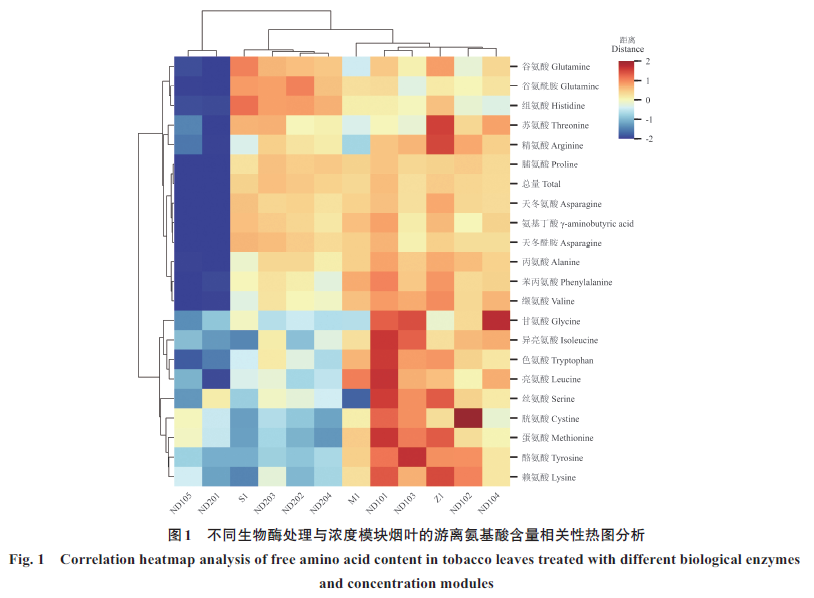
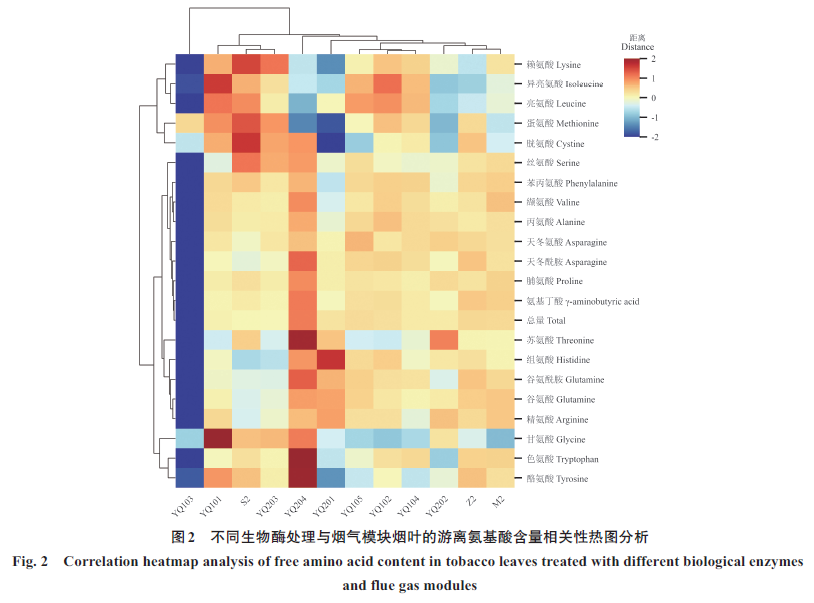
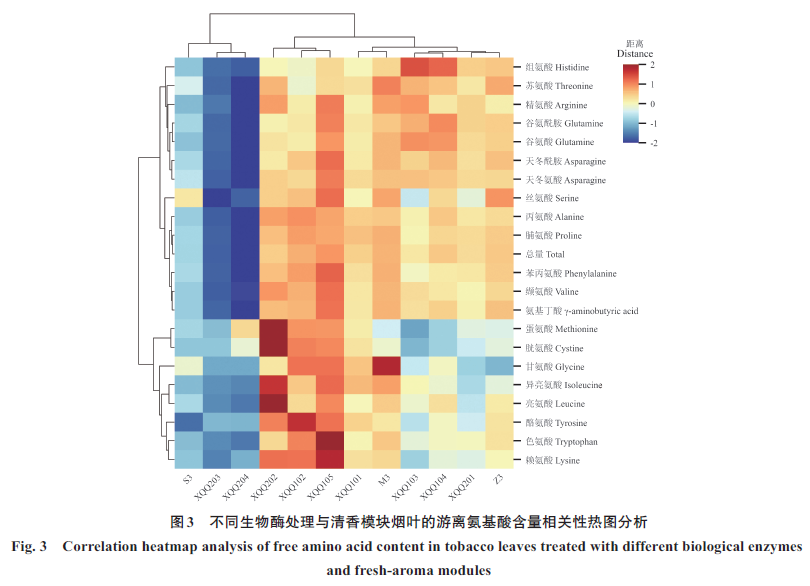
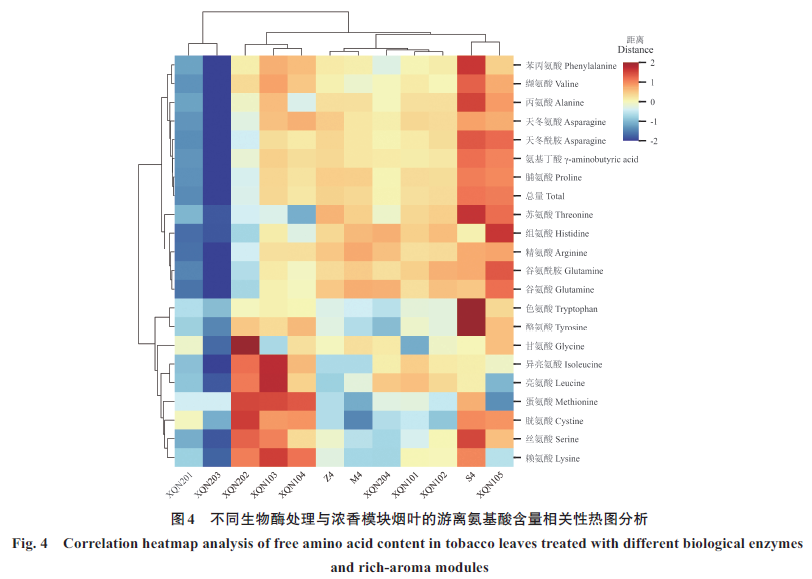
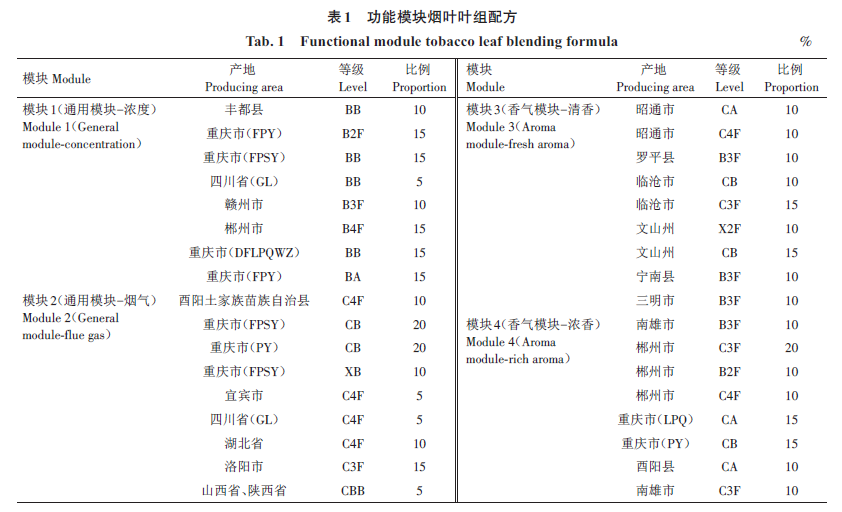
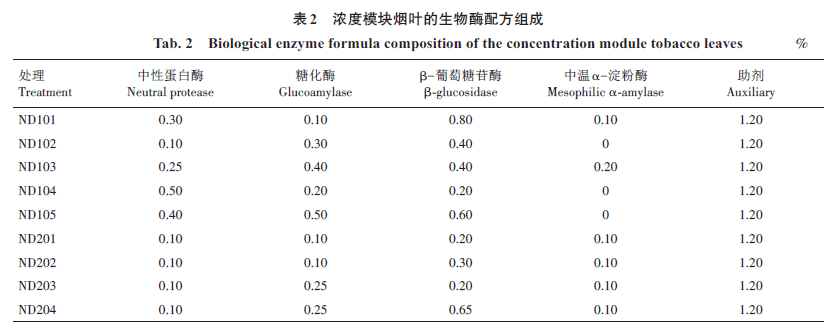
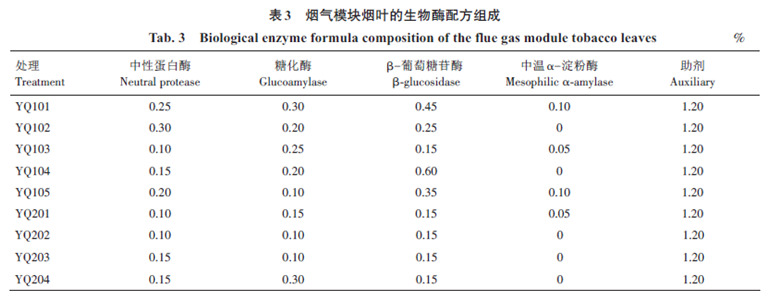
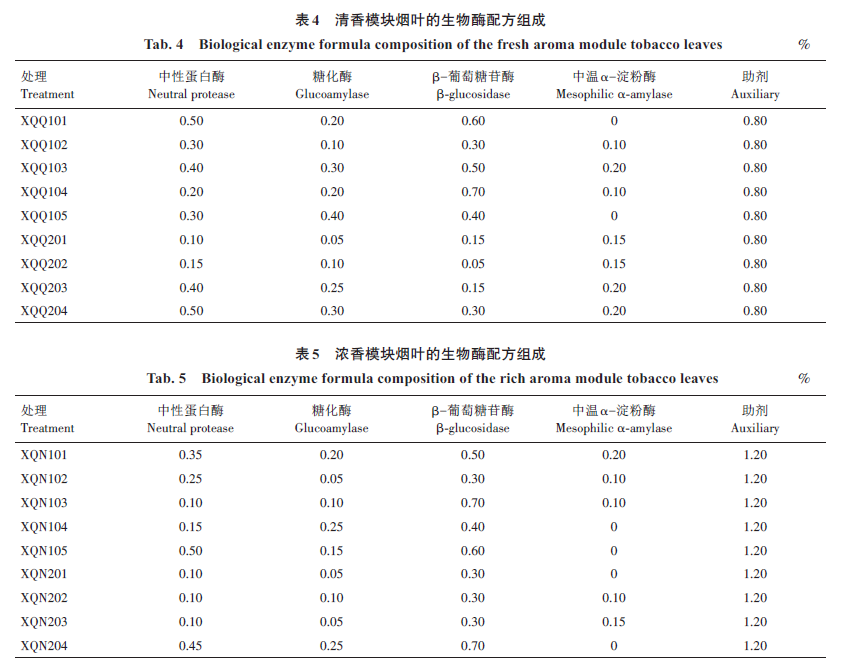
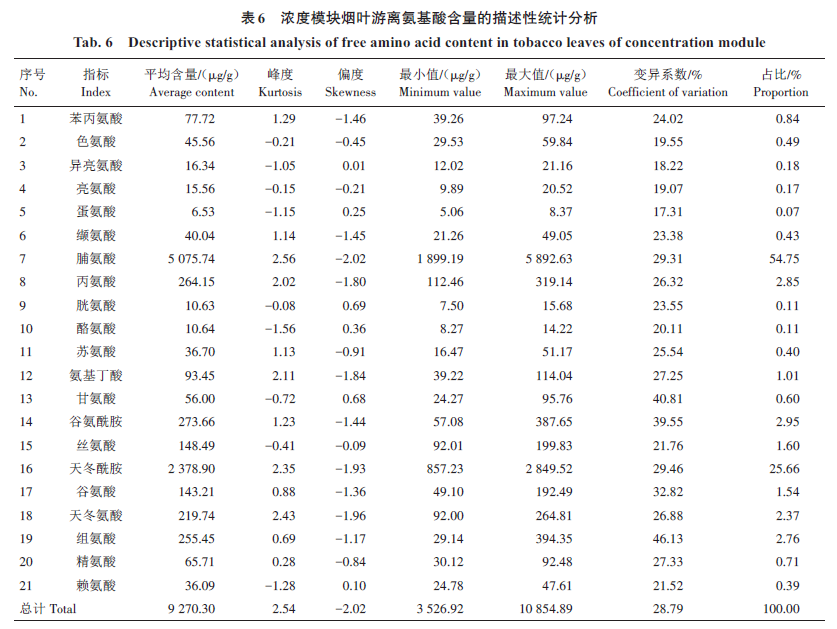
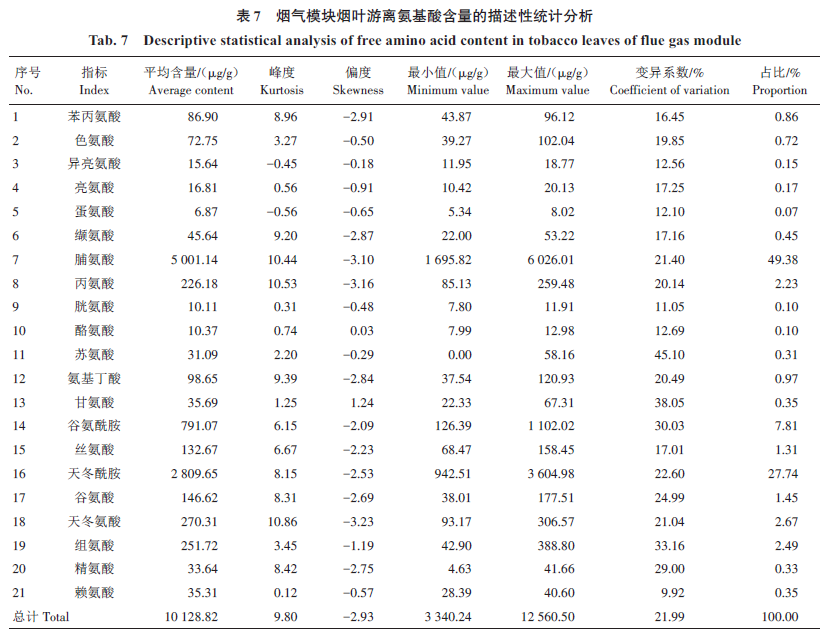
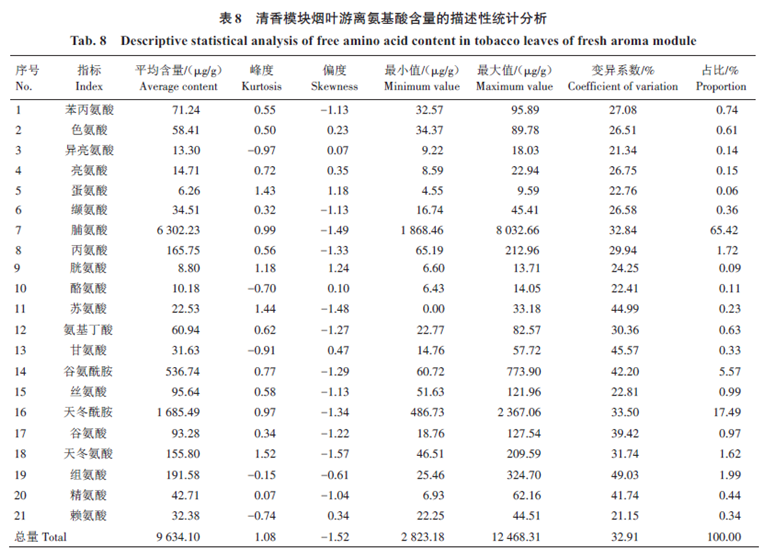
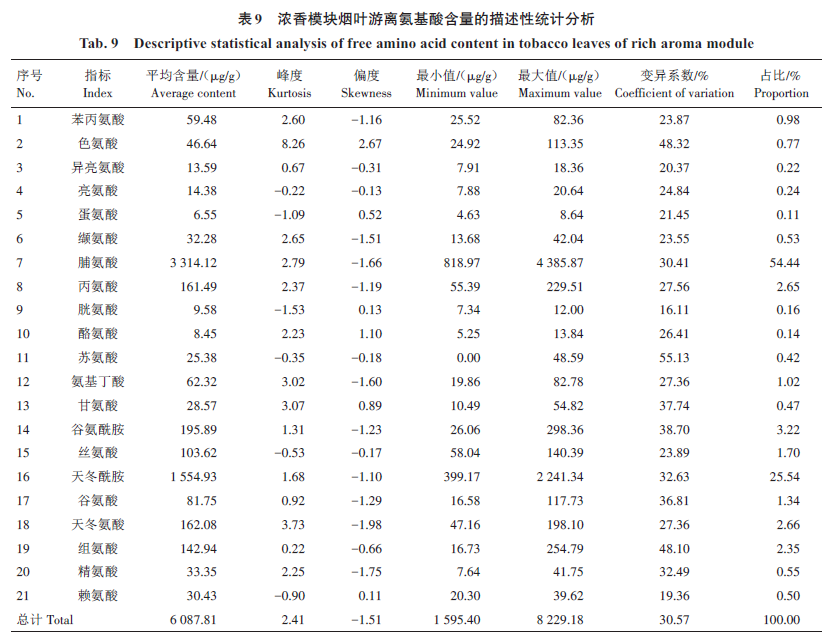
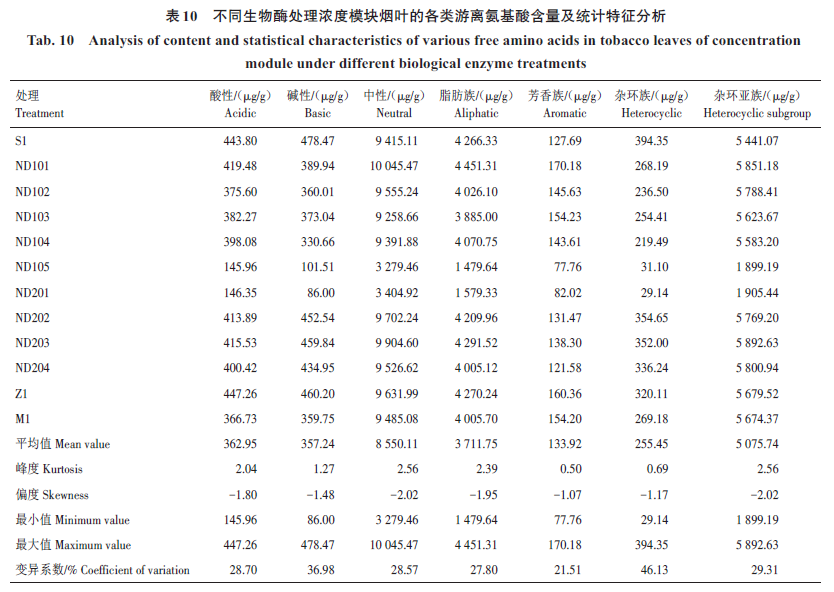
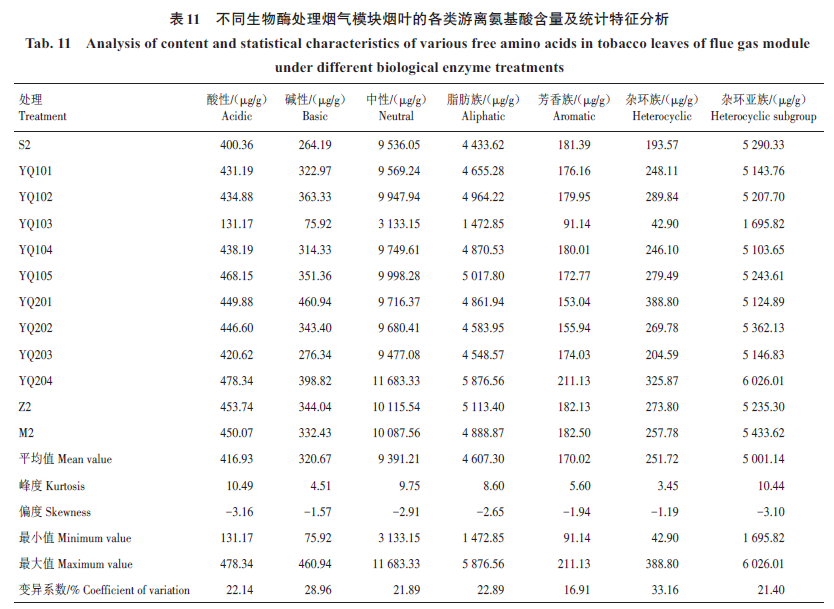
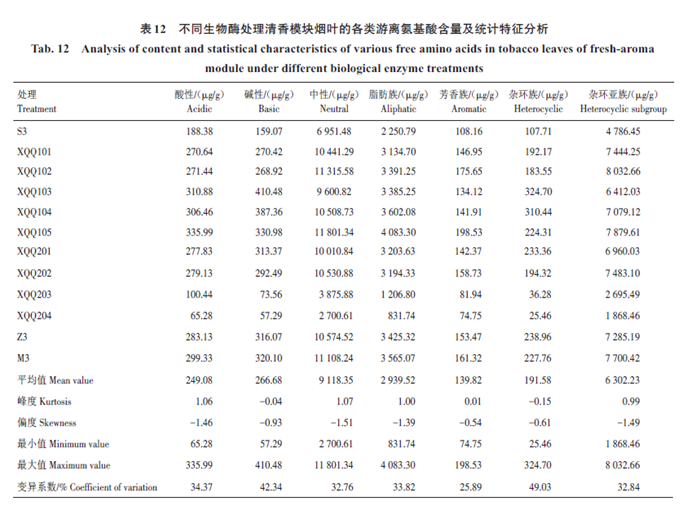
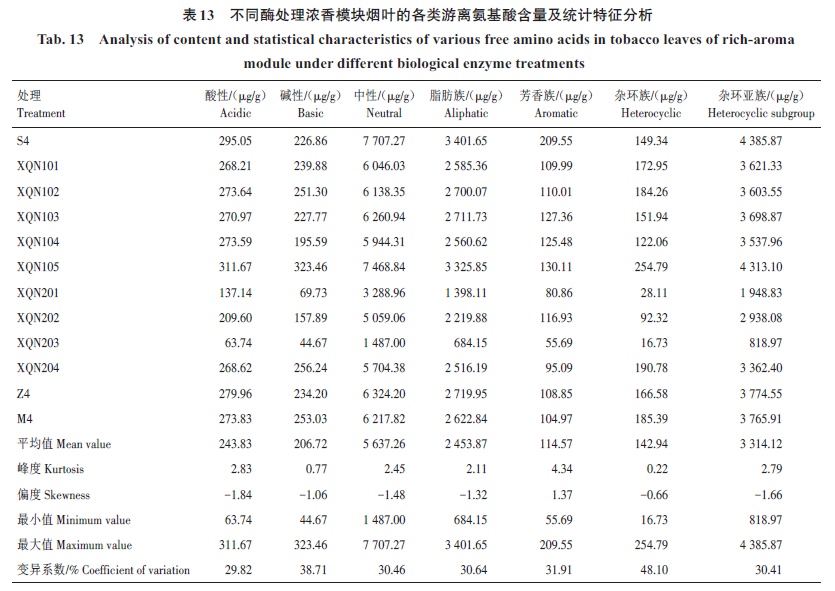
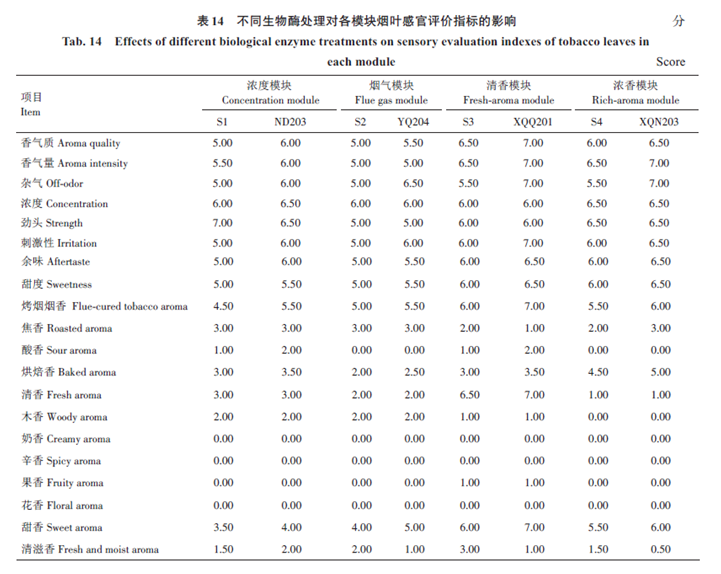
摘要: 为探究生物酶处理对浓度(ND)、烟气(YQ)、清香(XQQ)和浓香(XQN)4类功能模块烟叶游离氨基酸特性及感官品质的差异化调控效应,以4类模块配方烟叶为对象,基于制丝生产线实际,喷洒不同配比的复合酶制剂,于50 ℃反应6 h后测定游离氨基酸含量,并结合描述性统计、热图聚类及感官评价进行分析。结果表明,脯氨酸为各模块中占比最高的游离氨基酸(49.38%~65.42%),经优化酶组ND203和YQ204处理后,其含量显著提升,使烟叶甜香增强;从酸碱性分类来看,碱性氨基酸变异系数最高(28.96%~42.34%),说明其对酶处理最为敏感;酸性氨基酸在清香模块优化组XQQ201处理下含量提升47.48%,有效强化了烟叶的酸香清新感。经4类模块对应优化酶组(ND203、YQ204、XQQ201、XQN203)处理后,各模块烟叶杂气均减少20%以上,烤烟烟香、烘焙香和甜香均明显提升;其中,烟气、清香和浓香模块的清滋香有所减弱,浓香模块的焦香则明显增强。综上,通过多酶协同作用,可定向调控模块烟叶游离氨基酸组成,进而实现模块烟叶功能特性的提升,为卷烟工业制丝环节生物酶技术的规模化应用提供了技术支撑。

关键词: 烟叶, 生物酶, 游离氨基酸, 感官品质

Abstract: To explore the differential regulatory effects of biological enzyme treatment on the characteristics of free amino acids and sensory quality of tobacco leaves with four functional modules of concentration(ND),smoke(YQ),fragrance(XQQ)and strong fragrance(XQN),four kinds of modular formula tobacco leaves were used as the object,based on the actual conditions of the tobacco threshing and redrying line,different proportions of compound enzyme preparations were sprayed,followed by incubation at 50 ℃ for 6 hours. Subsequently,the content of free amino acids was determined,and the data were analyzed combined with descriptive statistics,heatmap clustering and sensory evaluation.The results showed that proline was the highest proportion of free amino acids(49.38%—65.42%)in each module. After treatment with the optimized enzyme groups ND203 and YQ204,its content was significantly increased,thereby enhancing the sweet aroma of tobacco leaves. From the perspective of acid‐base classification,the coefficient of variation of basic amino acids was the highest(28.96%—42.34%),indicating that they were the most sensitive to enzyme treatment. The content of acidic amino acids increased by 47.48% under the treatment of XQQ201,which effectively strengthened the sour and fresh feeling of tobacco leaves. After treatment with the optimized enzyme groups(ND203,YQ204,XQQ201,XQN203)corresponding to the four modules,the off‐odor of tobacco leaves in each module was reduced by more than 20%,and the flue‐cured tobacco aroma,baked aroma and sweet aroma of flue‐cured tobacco were obviously improved. Among them,the fresh and moist aroma of ND,XQQ and XQN modules was weakened,and the roasted aroma of the XQN module was significantly enhanced.In summary,through the synergistic effect of multiple enzymes,the free amino acid composition of the module tobacco leaves can be directionally regulated,and the functional characteristics can be improved,which provides technical support for the large‐scale application of biological enzyme technology in the tobacco industry.

Key words: Tobacco leaf, Biological enzyme, Free amino acid, Sensory quality

中图分类号: