河南农业科学 ›› 2026, Vol. 55 ›› Issue (5): 135-145.DOI: 10.15933/j.cnki.1004-3268.2026.05.014

• 畜牧·兽医 • 上一篇    下一篇

胍基乙酸对高脂饮食诱导肥胖小鼠肠道结构及微生物组成的影响

宁江华,田继英   

  1. (晋中师范高等专科学校,山西 晋中 030600)
  • 收稿日期:2025-11-24 接受日期:2026-01-15 出版日期:2026-05-15 发布日期:2026-06-02
  • 作者简介:宁江华,中级实验师,硕士,主要从事动物遗传育种与繁殖研究。E-mail:70566987@qq.com

Effects of Guanidinoacetic Acid on Intestinal Structure and Microbial Composition in High‐Fat Diet‐Induced Obese Mice

NING Jianghua,TIAN Jiying   

  1. (Jinzhong Normal Junior College,Jinzhong 030600,China)
  • Received:2025-11-24 Accepted:2026-01-15 Published:2026-05-15 Online:2026-06-02

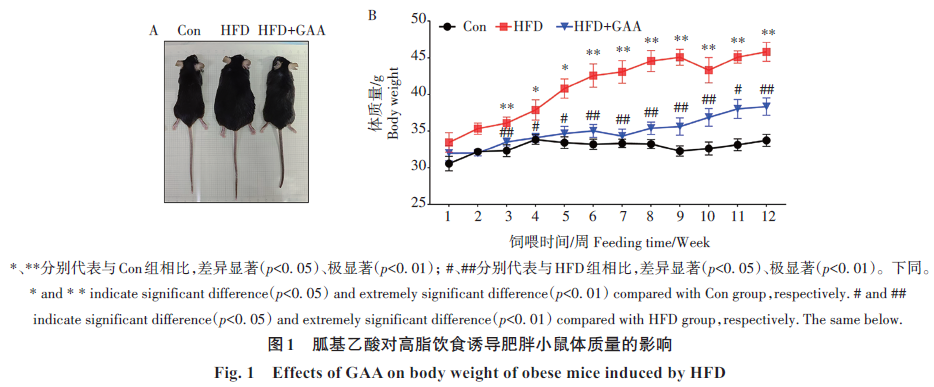
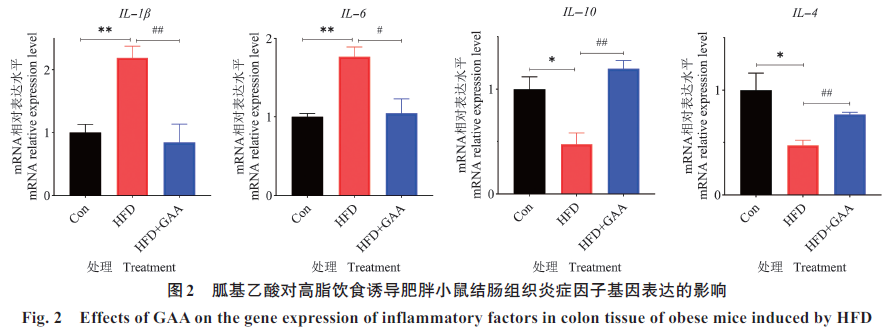
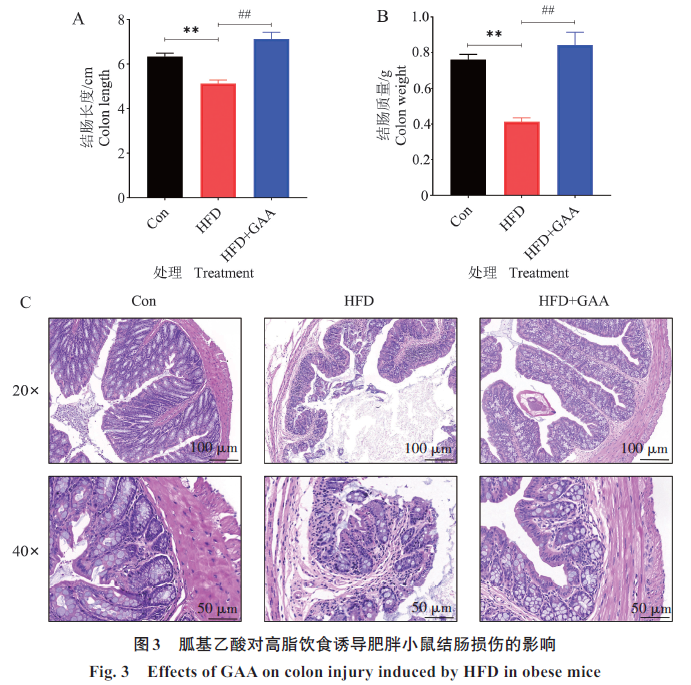
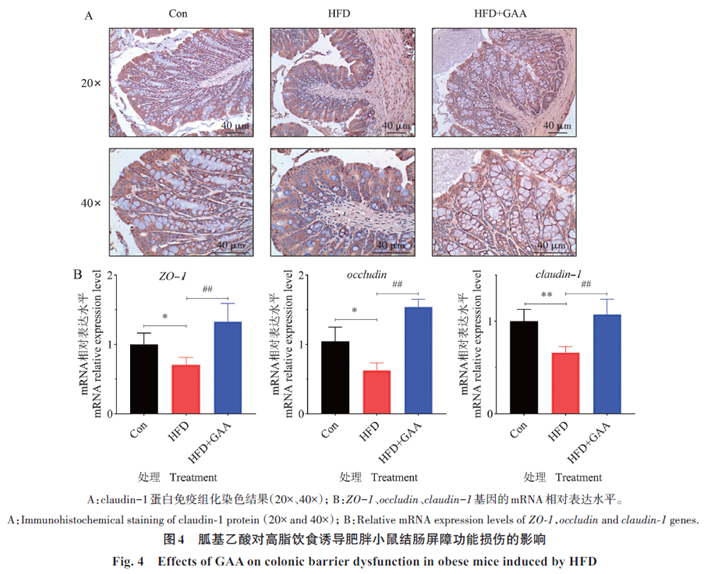
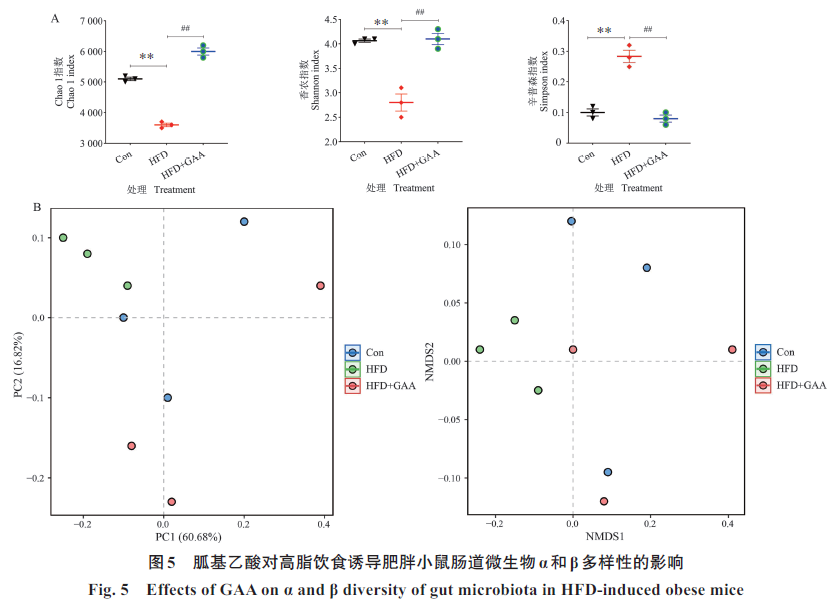
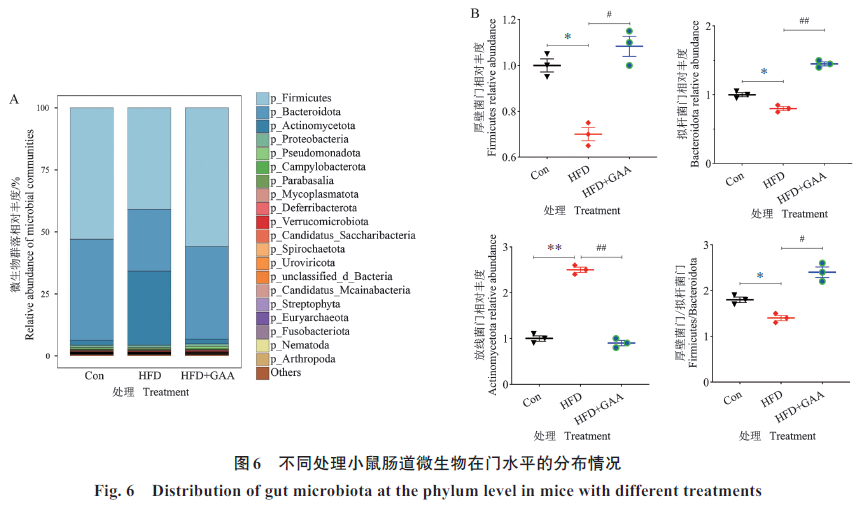
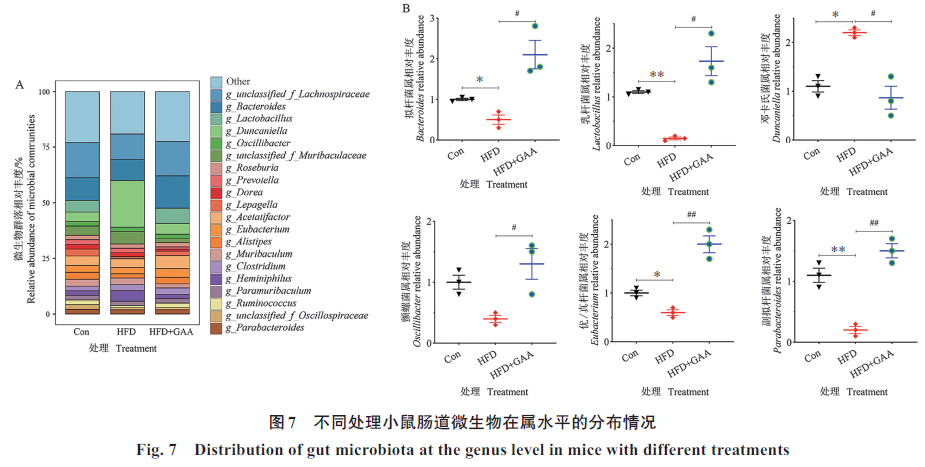
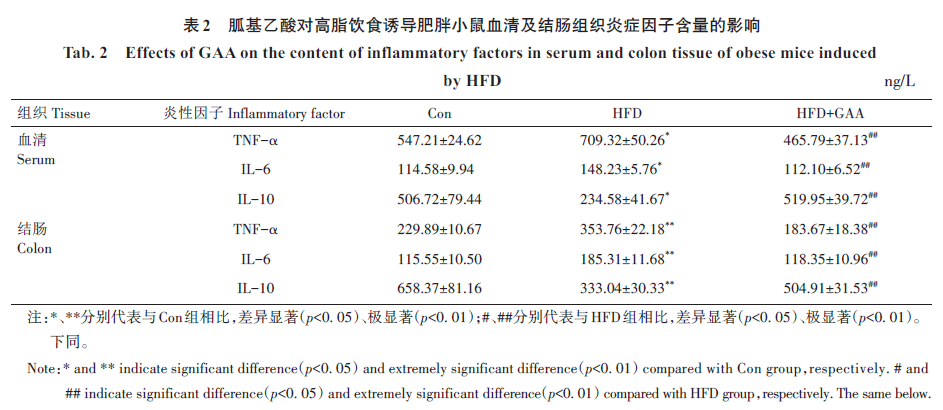
摘要: 为探究胍基乙酸(Guanidinoacetic acid,GAA)对高脂饮食(High‐fat diet,HFD)诱导肥胖小鼠肠道组织病理形态及肠道微生物群落结构的影响,选取24只C57BL/6J小鼠,随机分为空白对照组(Con组)、高脂饮食组(HFD组)和高脂饮食补充1%胍基乙酸组(HFD+GAA组),每组8只。饲养12周后,收集小鼠血液、结肠组织及粪便,通过ELISA检测血清和结肠组织中白细胞介素-6(IL-6)、白细胞介素-10(IL-10)、肿瘤坏死因子α(TNF-α)含量,苏木精-伊红染色和免疫组化染色观察结肠组织结构及紧密连接蛋白的表达情况,实时荧光定量PCR(RT-qPCR)检测炎症因子与紧密连接相关基因的mRNA相对表达量,并进行宏基因组测序,分析肠道微生物群落结构。结果表明,与Con组相比,HFD组小鼠体质量显著或极显著升高,同时结肠长度与质量均极显著降低,结肠组织出现明显结构损伤;经GAA干预后,上述异常表型均得到显著改善。此外,HFD组IL-6、TNF-α含量显著或极显著升高,IL-10含量显著或极显著降低,而HFD+GAA组则呈现相反趋势。免疫组化染色及RT-qPCR结果表明,与Con组相比,HFD组小鼠结肠组织中闭锁小带蛋白1(ZO-1)、闭合蛋白(Occludin)及紧密连接蛋白1(Claudin-1)的含量显著或极显著降低;而补充GAA可显著逆转上述变化。同时,GAA能够改善肥胖小鼠肠道微生物的物种组成,显著或极显著增加厚壁菌门(Firmicutes)、拟杆菌门(Bacteroidota)以及拟杆菌属(Bacteroides)、乳杆菌属(Lactobacillus)、优/真杆菌属(Eubacterium)、颤螺菌属(Oscillibacter)和副拟杆菌属(Parabacteroides)的相对丰度,显著或极显著降低放线菌门(Actinomycetota)以及邓卡氏菌属(Duncaniella)的相对丰度。综上,GAA可以通过调节肠道微生物群组成、增加有益菌丰度、恢复紧密连接蛋白表达水平,改善高脂饮食诱导肥胖小鼠的肠道炎症及肠道病理损伤。

关键词: 肥胖小鼠, 胍基乙酸, 高脂饮食, 肠道微生物, 肠道炎症, 炎症性肠病

Abstract: To investigate the effects of guanidinoacetic acid(GAA)on the intestinal tissue pathological morphology and intestinal microbial community structure of obese mice induced by high‐fat diet(HFD),24 C57BL/6J mice were randomly divided into blank control group(Con group),high‐fat diet group(HFD group)and high‐fat diet supplemented with 1% GAA group(HFD+GAA group),with 8 mice in each group. After 12 weeks of feeding,the blood,colon tissue and feces of mice were collected. ELISA was used to detect the expression levels of interleukin‐6(IL‐6),interleukin‐10(IL‐10)and tumor necrosis factor‐α(TNF‐α) in serum and colon tissues. Hematoxylin‐eosin staining and immunohistochemical staining were performed to observe the colon tissue structure and the expression of tight junction proteins,real‐time quantitative PCR(RT‐qPCR) was used to detect the relative mRNA expression levels of inflammatory factors and tight junction‐related genes,and metagenomic sequencing was conducted to analyze the intestinal microbial community structure. The results showed that compared with the Con group,the body weight of mice in the HFD group was significantly or extremely significantly increased,while the colon length and weight were extremely significantly decreased,and obvious structural damage was observed in the colon tissue;after GAA intervention,the above abnormal phenotypes were significantly improved. In addition,the contents of IL‐6 and TNF‐α in the HFD group were significantly or extremely significantly increased,the content of IL‐10 was significantly or extremely significantly decreased,while the HFD+GAA group showed the opposite trend.The results of immunohistochemical staining and RT‐qPCR showed that compared with the Con group,the expression levels of ZO‐1,occludin and claudin‐1 in the colon tissue of mice in the HFD group were significantly or extremely significantly decreased;supplementation with GAA could significantly reverse the above changes.Meanwhile,GAA could improve the species composition of intestinal microorganisms in obese mice,significantly or extremely significantly increase the relative abundances of Firmicutes,Bacteroidota,BacteroidesLactobacillusEubacteriumOscillibacter and Parabacteroides,and significantly or extremely significantly decrease the relative abundances of Actinomycetota and Duncaniella.In summary,GAA can improve intestinal inflammation and intestinal pathological damage in high‐fat diet‐induced obese mice by regulating the composition of intestinal microbiota,increasing the abundance of beneficial bacteria,and restoring the expression level of tight junction proteins.

Key words: Obese mice, Guanidinoacetic acid, High‐fat diet, Gut microbiota, Intestinal inflammation, Inflammatory bowel disease

中图分类号: