河南农业科学 ›› 2026, Vol. 55 ›› Issue (10): 48-58.DOI: 10.15933/j.cnki.1004-3268.2026.10.006

• 作物栽培·遗传育种 • 上一篇    下一篇

小麦骨干亲本豫麦2号系谱分析

岳振国,岳云霞,赵维强   

  1. (濮阳市农林科学院,河南 濮阳 457000)
  • 收稿日期:2026-05-19 接受日期:2026-07-09 出版日期:2026-10-15 发布日期:2026-10-28
  • 作者简介:岳振国,副研究员,主要从事农作物栽培育种、新技术推广及农业信息化研究。E-mail:polo3jk@163.com。岳云霞为同等贡献作者
  • 基金资助:
    财政部和农业农村部国家现代农业产业技术体系项目(CARS-03-02-31)

Pedigree Analysis of Wheat Backbone Parent Yumai 2

Yue Zhenguo,Yue Yunxia ,Zhao Weiqiang   

  1. (Puyang Academy of Agricultural and Forestry Sciences,Puyang 457000,China)
  • Received:2026-05-19 Accepted:2026-07-09 Published:2026-10-15 Online:2026-10-28

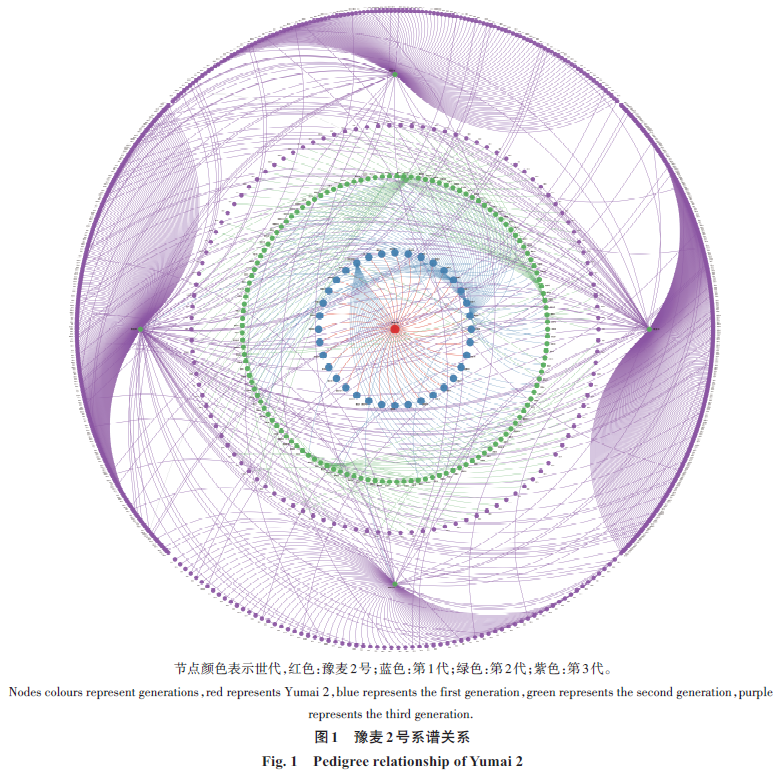
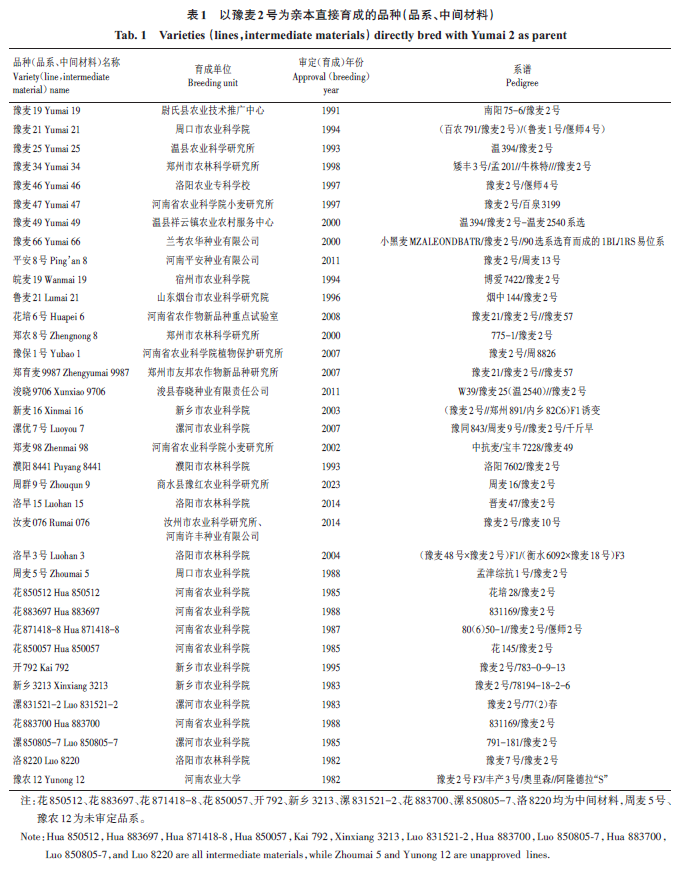
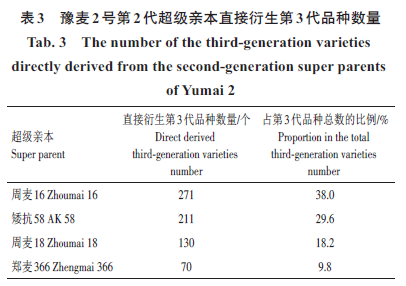
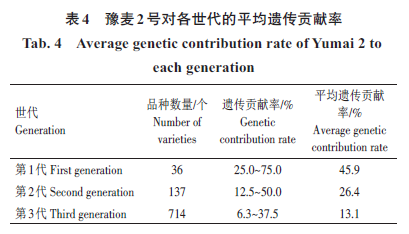
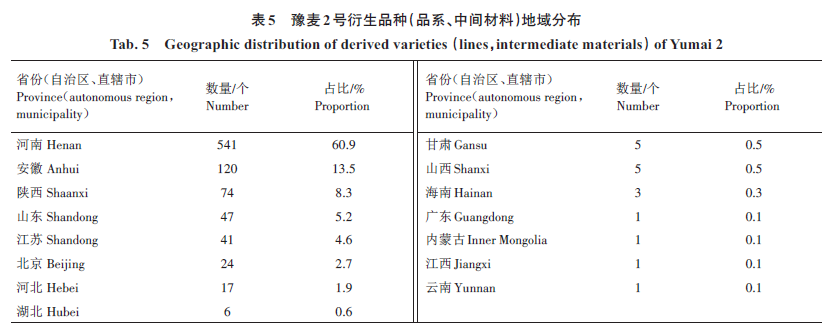
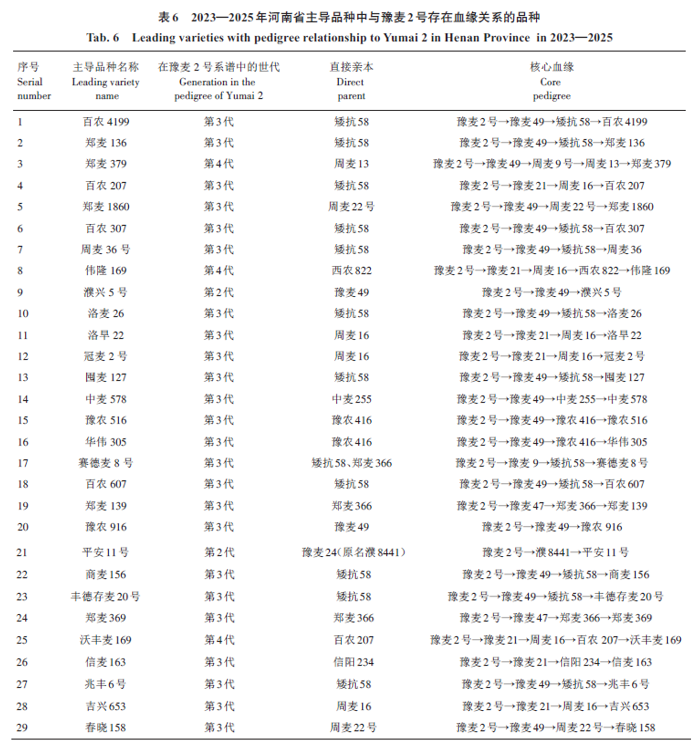
摘要: 豫麦2号(宝丰7228)是黄淮麦区代表性品种,兼具高产、抗逆、广适及突出配合力等优良特性,在生产中发挥了重要作用,是跨越数十年的关键骨干亲本。系统梳理豫麦2号及其887个衍生品种(品系、中间材料)的系谱信息,构建系谱网络,揭示从豫麦2号到第3代品种的遗传传递路径,分析不同世代、审定时期及地域的衍生品种(品系、中间材料)分布特征,并采用共祖先度法对其遗传贡献进行定量评估,以期为黄淮麦区小麦育种的高质量、可持续发展提供科学支撑。结果表明,豫麦2号衍生家族呈现典型的“金字塔”式扩张结构,第1代(直接衍生)品种(品系、中间材料)36个,第2代137个,而第3代(深层衍生)达714个,占衍生品种(品系、中间材料)总数的80.5%。审定(育成)品种(品系、中间材料)数量从1982—2000年的24个快速增长至2021—2025年的482个,仅最近5 a(2021—2025)审定的品种数已超过此前20 a审定(育成)品种(品系、中间材料)数的总和。周麦16、矮抗58、周麦18、郑麦366为第2代超级亲本,共同支撑了第3 代中84.5% 的品种。豫麦2 号对第2 代品种的平均遗传贡献率达到26.4%,高于孟德尔分离定律的理论预期值(25.0%),表现出优异的配合力。衍生品种(品系、中间材料)高度集中于河南省(60.9%)、安徽省(13.5%)、陕西省(8.3%)和山东省(5.2%),基本覆盖黄淮麦区核心产区。2023—2025年河南省推介的小麦主导品种中76.3%含有豫麦2号血缘,表明其血缘在当前主推品种中仍占据核心地位。

关键词: 小麦, 豫麦2号, 骨干亲本, 系谱分析, 遗传贡献, 共祖先度法

Abstract: Yumai 2(Baofeng 7228)is a representative variety in the Huanghuai wheat region,possessing excellent characteristics,including high yield,stress resistance,wide adaptability,and outstanding combining ability. It has played a significant role in production,and has been a key backbone parent for decades. This study systematically compiled the pedigree information of Yumai 2 and its 887 derivative varieties(lines and intermediate materials). By constructing pedigree network,the genetic transmission pathway from Yumai 2 to the third⁃generation varieties was revealed,the distribution characteristics of derivative varieties(lines and intermediate materials)across different generations,approval periods,and geographical regions were analyzed,and its genetic contribution was quantitatively assessed using the coefficient of coancestry method,aiming to provide scientific support for the high⁃quality and sustainable development of wheat breeding in the Huanghuai wheat region. The results showed that the derivative family of Yumai 2 exhibited a typical‘ pyramid’ expansion structure,with 36 first⁃generation(directly derived) varieties(lines and intermediate materials),137 second⁃generation varieties,and 714 third⁃generation(deeply derived)varieties,accounting for 80.5% of the total derivative varieties(lines and intermediate materials). In terms of temporal distribution,the number of approved(bred)varieties (lines and intermediate materials) increased rapidly from 24 during 1982—2000 to 482 during 2021—2025,with the number approved in the most recent five years alone exceeding the total of the previous 20 years. Zhoumai 16,Aikang 58,Zhoumai 18,and Zhengmai 366 were identified as the second⁃generation super parents,collectively supporting 84. 5% of the third⁃generation varieties. The average genetic contribution rate of Yumai 2 to the second⁃generation varieties reached 26.4%,higher than the theoretical expectation(25.0%) under Mendelian segregation,demonstrating excellent combining ability.The derivative varieties(lines and intermediate materials) were highly concentrated in Henan Province(60.9%),Anhui Province(13.5%),Shaanxi Province(8.3%),and Shandong Province (5.2%),basically covering the core production areas in the Huanghuai wheat region. Among the leading wheat varieties recommended in Henan Province from 2023 to 2025,76.3% contained the pedigree of Yumai 2,indicating that its pedigree still occupied a core position among current mainstream varieties.

Key words: Wheat, Yumai 2, Backbone parent, Pedigree analysis, Genetic contribution, Coefficient of coancestry method

中图分类号: