河南农业科学 ›› 2026, Vol. 55 ›› Issue (10): 133-141.DOI: 10.15933/j.cnki.1004-3268.2026.10.013

• 畜牧·兽医 • 上一篇    下一篇

新疆褐牛早期妊娠阶段唾液与血浆生殖激素的动态差异及变化规律

王文景1,王思翰1,许可欣1,范明睿1,杨存明1,闫向民2,马桢2,陈磊1   

  1. (1.石河子大学 动物科技学院,新疆 石河子 832003;2.新疆畜牧科学院,新疆 乌鲁木齐 830011)
  • 收稿日期:2025-09-12 接受日期:2025-10-30 出版日期:2026-10-15 发布日期:2026-10-28
  • 通讯作者: 陈磊,副教授,博士,主要从事动物遗传育种研究。E-mail:chenlei0991@126.com
  • 作者简介:王文景,在读硕士研究生,研究方向:动物遗传育种。E-mail:15137211658@163.com
  • 基金资助:
    新疆褐牛联合育种群体改良提升行动计划课题项目(2025XJHN-5);新疆维吾尔自治区科技重大专项(2022A02001-1);新疆褐牛( 肉用型)遗传育种岗项目(XJARS-10-04)

Dynamic Differences and Variation Patterns of Reproductive Hormones in Saliva and Plasma of Xinjiang Brown Cattle during Early Pregnancy

Wang Wenjing1,Wang Sihan1,Xu Kexin1,Fan Mingrui1,Yang Cunming1,Yan Xiangmin2,Ma Zhen2,Chen Lei1   

  1. (1.College of Animal Science and Technology,Shihezi University,Shihezi 832003,China;2.Xinjiang Academy of Animal Science,Urumqi 830011,China)
  • Received:2025-09-12 Accepted:2025-10-30 Published:2026-10-15 Online:2026-10-28

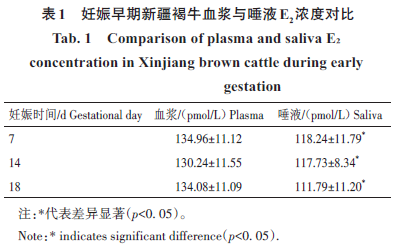
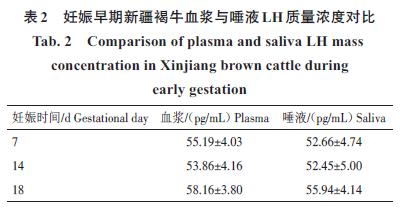
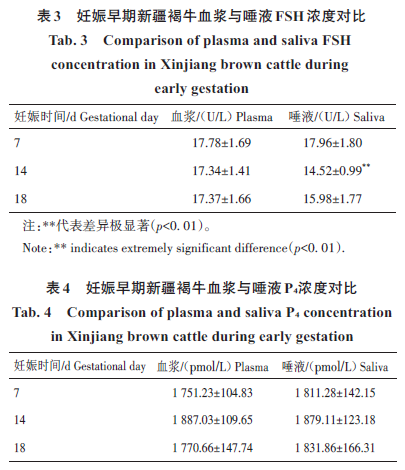
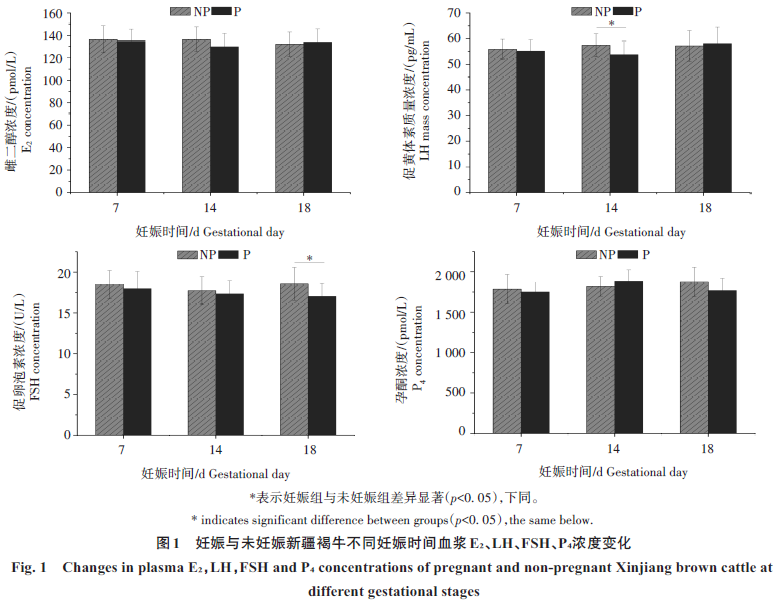
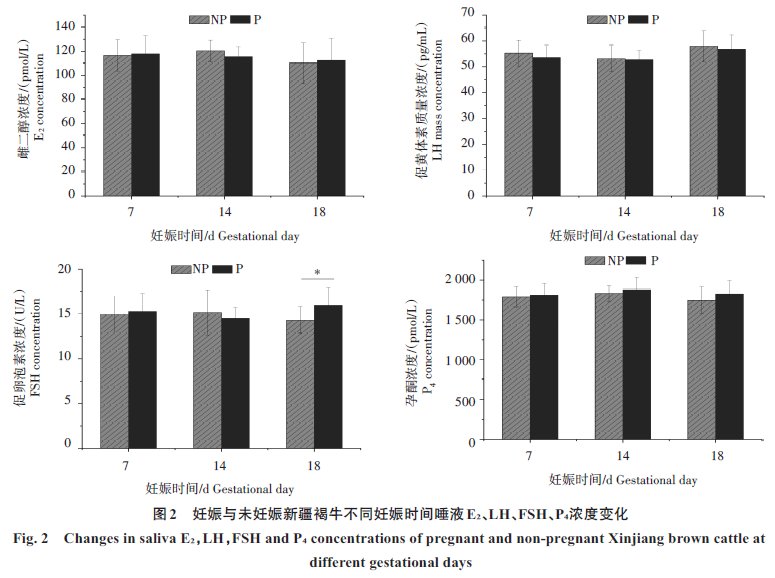
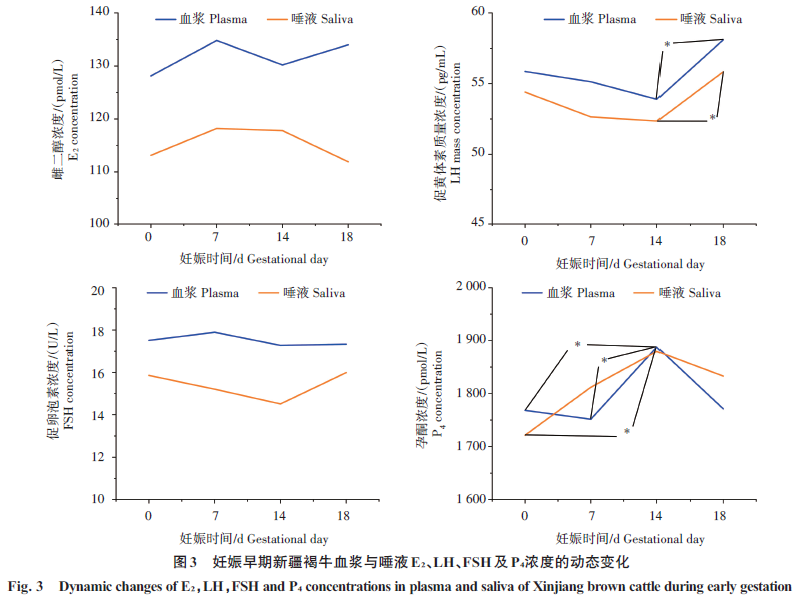
摘要: 探究0~18 d早期妊娠阶段新疆褐牛唾液与血浆中生殖激素的变化规律及样本间差异,为研发无创妊娠诊断技术、解析早期妊娠维持的生理机制提供理论依据。试验选取33头自然发情新疆褐牛,分别于配种后第0、7、14、18天同步采集唾液、血浆样本,配种35 d经B超筛选11头妊娠牛、11头未妊娠牛,采用酶联免疫吸附(ELISA)试验检测孕酮(P₄)、促黄体素(LH)、促卵泡素(FSH)、雌二醇(E₂)浓度。结果表明,血浆样本中妊娠组第14天LH质量浓度、第18天FSH浓度均显著低于未妊娠组,唾液样本中妊娠组第18天FSH浓度显著高于未妊娠组。开展同时间点血液、唾液激素浓度对比,可见E₂浓度在第7、14、18天2类样本中差异显著,FSH浓度在第14天体液中差异极显著,LH和P4浓度差异不显著。动态时序变化分析表明,2类样本LH质量浓度变化趋势一致且第14、18天浓度差异显著,血浆、唾液P₄浓度第0天和第14天差异均显著,血浆P₄浓度第7、14天差异显著,妊娠7 d后血浆与唾液P₄时序变化趋势趋于同步。综上,新疆褐牛早期妊娠条件下,唾液能够反映生殖激素动态变化,检出妊娠特异性激素差异,表明唾液可替代血液作为无创样本开展早期妊娠监测。

关键词: 新疆褐牛, 早期妊娠, 生殖激素, 唾液检测, 血浆检测

Abstract: In order to explore the changes and differences of reproductive hormones in saliva and plasma of Xinjiang brown cattle in early pregnancy stage from day 0 to day 18,and to provide theoretical basis for the development of non⁃invasive pregnancy diagnosis technology and the analysis of physiological mechanism of early pregnancy maintenance,33 natural estrus Xinjiang brown cattle were selected in the experiment. Saliva and plasma samples were collected simultaneously on days 0,7,14 and 18 after mating. On the 35th day of mating,11 pregnant cattle and 11 non⁃pregnant cattle were screened by B⁃ultrasound. Enzyme⁃linked immunosorbent assay(ELISA) was used to detect the concentrations of progesterone(P4),luteinizing hormone(LH),follicle⁃stimulating hormone(FSH) and estrogen(E2). The results showed that the LH mass concentration on the 14th day and the FSH concentration on the 18th day in the plasma samples of the pregnant group were significantly lower than those in the non⁃pregnant group,and the FSH concentration on the 18th day in the saliva samples of the pregnant group was significantly higher than that in the non⁃pregnant group. The comparison of hormone concentrations in blood and saliva at the same time point showed that the concentration of E2 was significantly different between the two types of samples on days 7,14,18,and the concentration difference between body fluids on the 14th day of FSH was extremely significant. There was no significant difference in LH and P4 concentration. The dynamic time series analysis showed that the change trend of LH mass concentration of the two types of samples was consistent and the concentration difference between the 14th day and 18th day groups was significant. The concentrations of P4 in plasma and saliva were significantly different between day 0 and day 14,and the concentration of P4 in plasma was significantly different between day 7 and day 14. After 7 d of pregnancy,the change trend of P4 in blood and saliva tended to be synchronized.In summary,for Xinjiang brown cattle during early pregnancy,saliva can reflect dynamic changes in reproductive hormones and detect differences in pregnancy⁃specific hormones,suggesting that saliva can serve as a non⁃invasive alternative to blood for early pregnancy monitoring.

Key words: Xinjiang brown cattle, Early pregnancy, Reproductive hormone, Saliva detection, Plasma detection

中图分类号: